

So you won over the consumer in the tasting room and made a few sales, but once they leave – what then?
Will they be able to go to your website and purchase more wine?
Maybe they haven’t as yet visited your tasting room and you’re hoping they’ll search out and find your cellar door within the crowded wine tourism space online.
And when they do….
Will your website add value and strengthen the relationship (i.e. cultivate loyal brand ambassadors & create further sales) or will it leave a sour taste in the mouth?
Just like any other industry, your winery website is a primary touch-point for your target audience.
Whether you have an eCommerce (sales) website or use your site to better market your wine tourism offering, ask yourself these simple questions…
- Does my website provide my target audience with a memorable experience and prompt them to action?
- Can consumers even find my website in the crowded online space?
- Is my website converting enough visitors into customers?
Yes? No? Not sure?
For far too long, websites have been an after-thought – a rushed, tack on for wine businesses. When in reality, a website should be your hardest working employee. It works for you 24/7, 7 days a week, 365 days of the year.
And it is able to multi-task by covering:
- Marketing and promotion
- Lead generation and conversion
- Customer service
- Event bookings
- Sales
- And the list goes on…..
So is your winery website actually doing all these functions and working hard for you as a powerful inbound marketing machine?
Possibly not.
This may be why you’re considering heading down the road of a new winery website build. Here are a few key points for you to consider to ensure your online presence is strong and complements your overall business objectives.
What’s your investment?
A website is an investment.
An investment in your time, resources and – yes, $.
Keep in mind though – you can’t build the Space Station on a Toy Car budget!
Be realistic– if you require eCommerce facilities, Wine Club and/or Events Ticketing Systems inbuilt it will be more expensive than a one page scrolling website with a third party shopping cart plugin.
So now you’re wondering how much does a winery website actually cost?
In reality, it all depends upon:
- Your website and marketing requirements
- Your choice of Content Management System
- Your Developer
And that leads to…
Brief your developer
Write a web design brief before even talking to a website developer.
A Website Brief guides the entire design and development process.
- It allows you as the business owner or marketer to deep dive into your website vision and confidently manage the website build process.
- And it enables website developers to quote more accurately. Therefore, you are able to source quotes that are comparable.
- It also gives clear direction to all stakeholders thus avoiding miscommunication and possible costly scope creep.
Now, what’s not to like about that?
If that seems all too complicated, before you sign anything, ensure your developer:
- Has a process in place where they run through your business requirements before starting a winery website build. Usually they will send you a pretty comprehensive form at the start of the project or meet with you at length and run through expectations – or both!
- Has a support system in place whereby they offer either a monthly maintenance retainer with security checks or are available to offer support as needed. Nothing worse than hiring a website developer, launching a new website and then finding they’re too busy to answer your calls when you seek further assistance.
There are pros and cons with working with large and small agencies or freelancers.
Get referrals and look for someone you wish to work with – you’ll be spending a lot of time on the phone, in meetings etc. with the web developer or project manager during the build process, so make sure you have a good rapport.
Choose a Content Management System (CMS)
The online space is rapidly evolving and you in 2016 have a wide choice – way more than just a few short years ago.
Shopify and Squarespace are becoming popular for start-ups and micro wineries.
Shopify is an online shopping system (eCommerce system) that can be easily integrated with WordPress or used as a standalone.
Alternatively, Squarespace is a website platform (CMS) which has eCommerce (shopping cart) facilities.
Both are easy enough to set up and really work best for those wineries just starting out.
WordPress is still a favourite with a tonne of integrations (free and paid) which can extend functionality and scale with your needs. It’s an easy to use CMS and enables you to create and maintain a website that’s unique to your brand, flexible and enables a user friendly experience.
The WooCommerce (eCommerce) function integrates well, but where many wineries come undone is that again – they want functions for which it really wasn’t originally designed. So head back to that Design Brief and work out those requirements before heading down the build path.
There are loads of other content management systems out there to consider. This is just a quick overview.
Whatever CMS you do eventually choose ensure that you are able to do simple edits yourself or you’ll end up paying your developer for every single image update or wording change.
Note:
To really integrate your marketing – take a look at Vin65. It incorporates a robust CMS, POS, eCommerce functionality as well as Wine Club management facilities. I got my geek on recently and had a good poke around. I’m tipping this will become an even more powerful platform in the near future. It really is worth a look.
Responsive design is a winner
Since the iPhone appeared in 2007, the number of consumers using their smart phone and other mobile devices to browse the web has literally exploded.
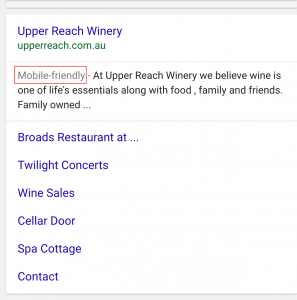
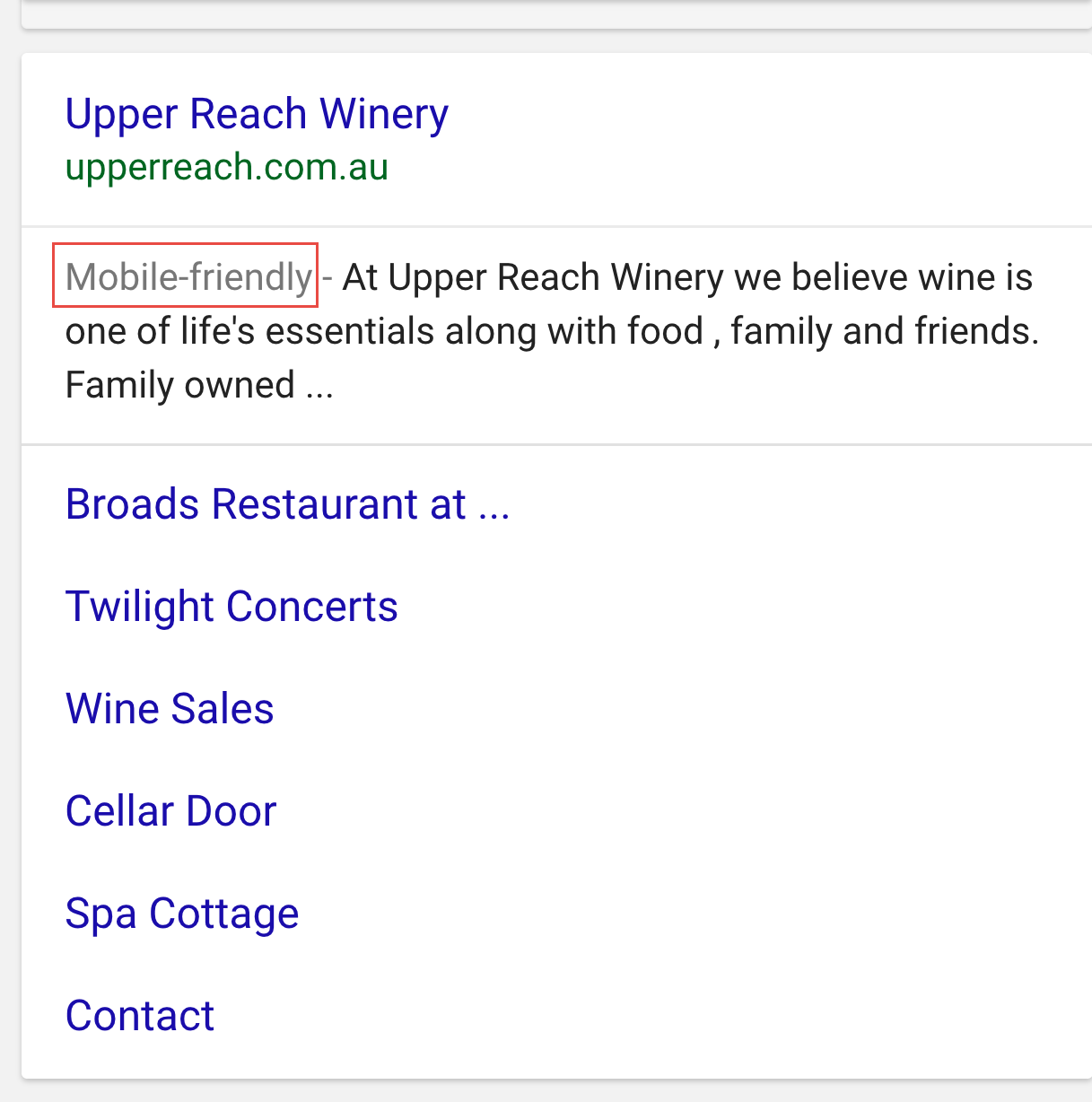
Responsive simply means it fits or adapts to the size of the screen on which it is being viewed – one website viewable on many devices. It’s mobile friendly!
 Combine great content and design
All too often, we see winery websites where they’ve chosen to make it visually appealing but have sacrificed content in the process. It’s all well and good to have a beautiful website, but focusing on looks alone, isn’t the answer.
Content is not just about words on the page – it should be a balance of text, video and images so it appeals to the different senses.
Don’t stack your website with content either. There has been a trend in the past to house every single tasting note, event, article, blog and loads of other information that is not current or relevant on websites.
This is not the way to go in 2016.
Your website should not be a repository for all your winery content.
Now before you jump up and down and say, but I’ve been told this is a great idea – Google loves content! Please consider a content heavy website may slow down loading times (not a good thing – no one likes slow websites and neither does Google).
AND those tasting notes you love so much were probably uploaded to the site so long ago it wasn’t search optimized and there is actually no easy way for visitors to find it.
So while you’re in the mode of a new winery website build, do a website audit. I’m sure there’s loads of dead wood on your website you can clear out and replace with current quality content.
Note: A great way to see if content is performing or not – check Google Analytics.
Quality content assists you to rank highly with the search engines, which means you’ll attract more of your potential customers, and they’ll be highly engaged.
And quite simply, low rankings equal fewer visitors and less sales opportunities.
Coming back to the design, remember that good design is not just about visual design – it’s about balancing good visual design and usability, resulting in a positive user experience.
Keep it simple and easy to navigate
There’s nothing worse than getting to a website and staring at it blankly as you try and figure out how to find out what you want to know.
Web visitors don’t want to think too hard!
Will they be able to find your address, opening times and other helpful information?
If it’s unclear why your winery exists, what you offer or how the consumer can get what they want – your website has failed.
As people become increasingly time-poor, they don’t have the patience to struggle with poorly thought out navigation.
Your navigation buttons should be clearly positioned so visitors can find the information they seek or the wine they want with just a few clicks.
Make sure you position the main message or offer prominently and include strong calls-to-action.
Create Calls to Action
Each page should serve a purpose and have a call to action that leads the consumer down the path to purchase. This might be something as simple as a ‘Subscribe to our newsletter’ opt-in.
Can people find your website?
It’s not much use having a website if people can’t find it!
As mentioned earlier, great content is one of the keys to ranking highly with the likes of Google, but it’s not the only way to optimize your website for search engines.
If you don’t have an effective search engine optimization (SEO) strategy, you could easily be the web’s best-kept secret and be missing out on countless sales opportunities.
Have you got an SEO strategy for both on and off page?
On page simply means search optimization of your web page while off page is all the other work you’re doing online to build brand awareness – social media, listings etc.
Are you ranking for the ‘right’ keywords? Have you built and encouraged quality backlinks to your website? Are all of your online channels linked together? Do you know how to attract more of your target market?
Social Sharing
When people do find your website and there is an event, a new wine release or some other newsworthy info – make sure it is easy for them to share by positioning mobile friendly social buttons.
 You don’t have to be across every social media network, but do make it easy for your fans to share your content.
Also, consider integrating User Generated Content into your website. Use an Instagram board with your brand hashtag. Loads of great content generated by your fans.
From research – people are 75% more likely to purchase from earned advertising over paid advertising. Yep, User Generated Content falls into that earned category!
Let’s wrap this up for now
Wow! We’ve covered a lot.
Your winery website really is the epicenter of your online world and is powerful inbound marketing tool.
It’s not a stand-alone tool though that sits out there in cyber space. To really get it working to 100% capacity, ensure it is fully integrated into your whole marketing strategy. Show your website a little TLC just as you do your cellar door and in no time it will be working for you 24/7.
Until next time…..
Looking for more information on affordable, professional web design solutions, take a quick look at our webdite design and development services.
Want more digital marketing tips and ideas to help promote your business?