Thanks to rapidly evolving technology, digital marketing for the tourism and hospitality sector is constantly advancing.
However, hoteliers notoriously under-spend on digital marketing initiatives and continue to rely on tired and obsolete advertising formats, especially print media.
In 2014, hopefully this trend will change with more travel and hospitality businesses embracing digital marketing strategies aimed at capturing and engaging their specific target audience.
So where should hoteliers be spending their digital marketing dollar and time in 2014?
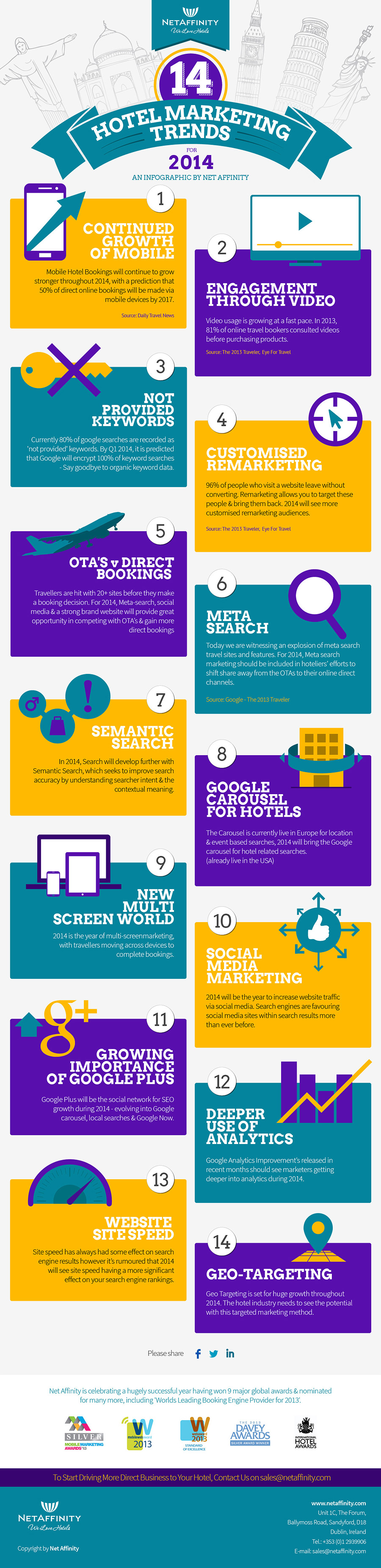
Net Affinity put together an infographic on digital marketing trends for hotels in 2014 to keep hoteliers up to date with developments and assist them to get ahead.
Mobile Responsive Websites:
With Australia being one of the highest users of mobile phones globally budgets should be allocated to Mobile responsive websites and increased tactics to respond to traffic coming from these devices.
Consider whether you should allocate budget for a responsive website and a mobile website or both as they are two different beasts entirely.
A responsive website is a desktop website than can be viewed on all mobile devices while a mobile website is a completely different website (built separately) where the content is generally limited to the most important elements (contact us, bookings and imagery).
Social Media Marketing
Consumer use of social media in the search and planning stages of travel is growing rapidly. Visual sites such as Instagram and Pinterest continue to lead this trend.
Google+ is becoming a major player, 2nd only to Facebook when comparing daily active users. Coupled with increasing customer use of video (Google owns YouTube) and it super search capabilities, Google + is definitely not to be overlooked in 2014.
Remarketing & Social Advertising
With the decreasing trend in organic reach in social networks, advertising on social networks, combined with remarketing should not be discounted.
Remarketing is a feature that lets you reach people who have previously visited your site, and show them relevant ads across the web or when they search on Google.
Semantic Search
Search capabilities are evolving rapidly and now with semantic technology, users can refine queries, personalise search results plus more – providing a more personal, interactive, conversational or dialogue-based search result.
To gain the benefits of semantic search, a cross pollination of keyword search optimisation across website – meta titles, media alt tags and copy; social and other online activities is key.
No longer should digital marketing be considered a secondary tier in hotel marketing – indeed even though this infographic is designed with hotels in mind, there is much wine, food and tourism marketers can learn from these trends in 2014.
Until next time…..